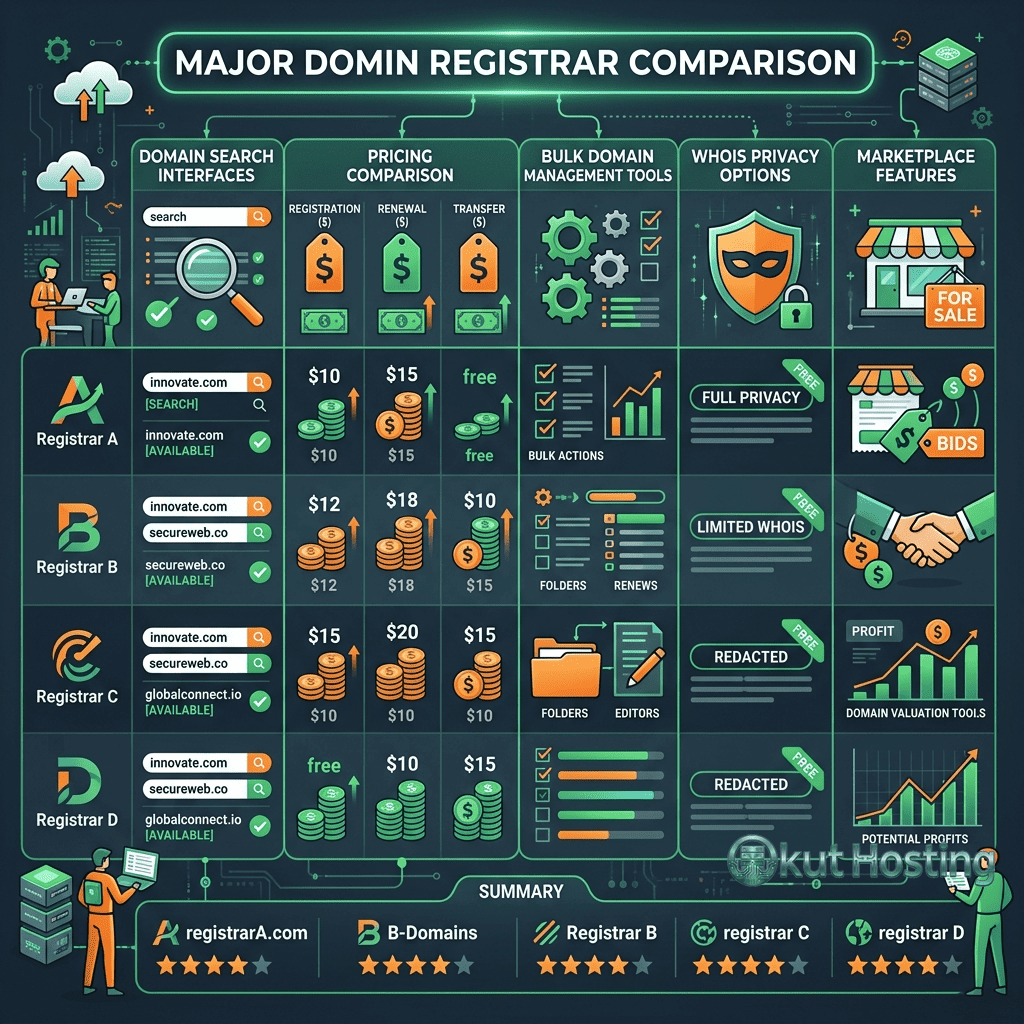
GoDaddy and Namecheap are two of the most popular domain registrars globally, collectively managing tens of millions of domain names. While both provide the fundamental service of domain registration, meaningful differences in pricing structures, WHOIS privacy policies, DNS management capabilities, user interface design, upselling practices, and additional services influence which registrar better serves specific needs. This comprehensive comparison examines both registrars across every significant dimension to help domain buyers make informed decisions based on factual differences rather than marketing claims.
The comparison maintains neutrality and presents factual differences without recommending one registrar over the other. Both GoDaddy and Namecheap are fully ICANN-accredited registrars that provide legitimate, reliable, and well-established domain registration services with different approaches to pricing, features, and customer experience.
Company Background
GoDaddy was founded in 1997 and has grown to become the world’s largest domain registrar by total domains under management, with over 80 million domains registered. GoDaddy is a publicly traded company (NYSE: GDDY) offering domain registration, web hosting, website builders, email services, and business tools. The company’s extensive marketing presence and brand recognition make it one of the most well-known names in the domain registration industry.
Namecheap was founded in 2000 and has grown to manage over 15 million domains, positioning itself as a compelling value-focused alternative to larger registrars. Namecheap is a privately held company offering domain registration, reliable hosting services, professional email, SSL certificates, and privacy-focused VPN services. The company has built its strong reputation on consistently competitive pricing, free WHOIS privacy protection, and a less aggressive approach to upselling compared to larger competitors.
Domain Registration Pricing
Domain pricing is a critical comparison point, but requires careful analysis of both initial registration and renewal pricing. GoDaddy frequently offers very low first-year registration prices (sometimes as low as $0.99 for .com domains) through promotional offers. However, GoDaddy’s renewal prices for .com domains are typically higher than Namecheap’s renewal rates. This promotional pricing strategy means that GoDaddy may appear cheaper for the initial first year but proves more expensive over the multi-year lifetime of a domain registration.
Namecheap’s pricing approach is more consistent between initial registration and renewal. While Namecheap’s first-year prices may not match GoDaddy’s deepest promotional discounts, the renewal prices are generally lower across all standard TLDs, making Namecheap more cost-effective for long-term domain ownership. For domain portfolios held over multiple years, the cumulative renewal pricing difference can be significant.
Both registrars offer discounts for multi-year registrations, bulk domain purchases, and promotional events. Transfer pricing (moving domains from another registrar) includes one year of registration renewal and is typically priced competitively at both registrars. It is important to note that domain pricing changes frequently, and buyers should verify current prices on the official websites before making purchasing decisions.
WHOIS Privacy Protection
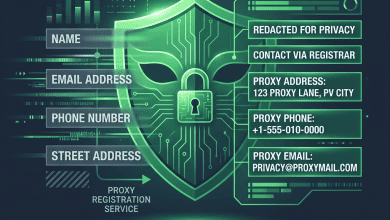
WHOIS privacy is a critical differentiator between these two registrars. Namecheap includes free WHOIS privacy protection (WhoisGuard) with all eligible domain registrations. This free privacy protection replaces the domain owner’s personal contact information in the public WHOIS database with Namecheap’s proxy information, protecting the registrant’s name, address, phone number, and email from public exposure.
GoDaddy offers WHOIS privacy protection as a paid add-on service, typically charging an annual fee per domain. For domain portfolio owners managing multiple domains, GoDaddy’s privacy fees add meaningful cost over time. GoDaddy’s premium privacy services include additional features like business registration privacy, but the basic WHOIS privacy that Namecheap includes for free requires additional payment at GoDaddy.
For privacy-conscious individual and business domain owners, the free WHOIS privacy inclusion at Namecheap provides significant value, particularly for portfolio owners managing multiple domains where per-domain privacy fees would accumulate quickly at GoDaddy.
DNS Management
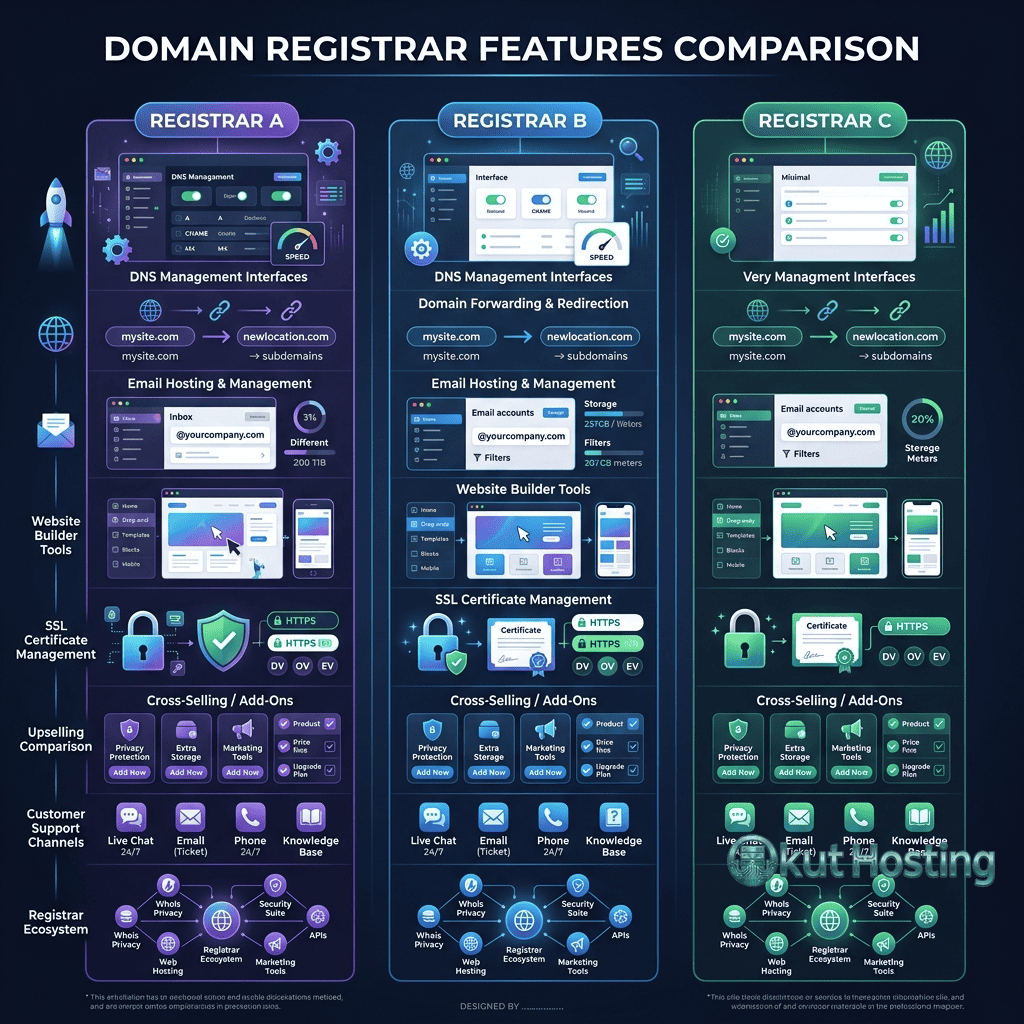
Both registrars provide DNS management interfaces for configuring domain name resolution. GoDaddy’s DNS management supports standard record types (A, AAAA, CNAME, MX, TXT, NS, SRV) with a web-based management interface. Namecheap’s DNS management provides similar functionality through its FreeDNS service, supporting the same standard record types with a clean management interface.
For advanced DNS requirements, both registrars support custom nameservers, enabling users to point domains to third-party DNS providers (Cloudflare, Route 53, Google Cloud DNS) for more advanced DNS features including anycast networking, DDoS protection, DNS analytics, and sub-millisecond resolution times. For basic and standard DNS management, both registrars provide adequate functionality for configuring domains for web hosting and email services.
User Interface and Experience
GoDaddy’s management interface has undergone significant redesign efforts and provides a modern, visually polished dashboard. However, GoDaddy’s interface includes frequent upselling prompts, promotional banners, and service recommendations throughout the management experience. The checkout process for domain registration includes multiple add-on suggestions (hosting, email, website builder, SSL certificates) that require active dismissal. This upselling approach is GoDaddy’s most commonly criticized user experience aspect.
Namecheap’s management interface is more straightforward with noticeably fewer upselling interruptions and promotional banners. The domain management dashboard provides clean access to DNS settings, WHOIS information, renewal management, and transfer controls. The checkout process includes significantly fewer add-on suggestions and upsell prompts compared to GoDaddy’s more aggressive approach. Namecheap’s interface prioritizes functional simplicity, which is generally preferred by technically oriented domain buyers and experienced web professionals.
Domain Transfer Policies
Both registrars support standard domain transfers following ICANN transfer policies. Incoming transfers to either registrar include one year of registration renewal at the transfer price. Transfer processing time is typically 5-7 days for both registrars, following the standard ICANN transfer process. Both registrars provide transfer authorization code (EPP code) generation for outgoing transfers through their management interfaces.
Namecheap includes free WHOIS privacy with transferred domains, while GoDaddy requires separate privacy purchase for transferred domains. For bulk domain transfers, both registrars provide tools and support to streamline the multi-domain transfer process.
Email Services
Both registrars offer email hosting services. GoDaddy provides Microsoft 365 email integration and its own email hosting plans. Namecheap offers Private Email powered by Open-Xchange and email forwarding services. Both registrars provide email services as paid add-ons to domain registration.
For basic email needs associated with domain registration, email forwarding (redirecting domain-based email addresses to existing email accounts like Gmail) is available at both registrars. Professional email hosting for business use requires paid plans at both registrars, with pricing and features varying by tier.
SSL Certificates
Both registrars sell SSL certificates from major Certificate Authorities. GoDaddy offers its own branded SSL certificates alongside certificates from other CAs. Namecheap offers SSL certificates from Comodo (Sectigo), RapidSSL, and other CAs. Both registrars provide domain validation (DV), organization validation (OV), and extended validation (EV) certificates at various price points.
However, with the widespread availability of free SSL certificates from Let’s Encrypt and Cloudflare, paid SSL certificates from domain registrars are primarily relevant for EV certificates (displaying organization name in the certificate), wildcard certificates, or specific compliance requirements. Most websites can obtain adequate SSL protection through free certificate providers.
Hosting Services
GoDaddy offers a comprehensive hosting portfolio including shared hosting, VPS hosting, dedicated servers, managed WordPress hosting, and website builder tools. GoDaddy’s hosting services are designed to provide an integrated experience with domain registration, enabling customers to manage domains and hosting through a single account.
Namecheap provides shared hosting, VPS hosting (via EasyWP for WordPress), and dedicated servers. While Namecheap’s hosting portfolio is smaller than GoDaddy’s, the hosting services provide adequate options for customers who prefer consolidating domain and hosting services with a single provider. Both registrars’ hosting services are independent from their domain registration quality — domain registration can be used with any hosting provider regardless of where the domain is registered.
Customer Support
GoDaddy provides customer support through phone, live chat, and support articles. Phone support is available 24/7 and is a distinguishing feature for customers who prefer voice communication for support issues. GoDaddy’s support infrastructure reflects its scale as the largest registrar, with extensive self-help resources and community forums.
Namecheap provides customer support through live chat, ticket system, and knowledge base articles. Phone support is not available, which may be a limitation for customers who prefer telephone communication. Namecheap’s live chat support is generally well-reviewed for responsiveness and technical competence. The knowledge base provides comprehensive documentation for self-service issue resolution.
Security Features
Both registrars provide essential and important domain security features. Two-factor authentication (2FA) protects account access at both registrars. Domain lock prevents unauthorized transfers from both platforms. GoDaddy offers additional premium security products including automated website security scanning and DDoS protection as paid services. Namecheap offers PremiumDNS with DNSSEC support for enhanced DNS security.
TLD Availability
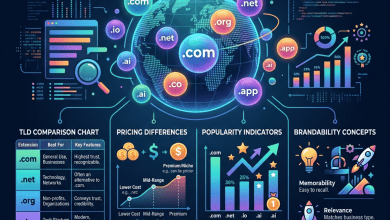
GoDaddy supports a wider range of top-level domains (TLDs) including generic TLDs (.com, .net, .org, .info), new gTLDs (.app, .dev, .shop, .tech, .online), and country-code TLDs (.co.uk, .de, .jp, .ca, .au). Namecheap also supports a broad range of TLDs though the selection may be slightly smaller than GoDaddy’s for certain niche or country-code extensions. For common TLD registrations (.com, .net, .org, .io, .co), both registrars provide full registration availability and competitive pricing.
API Access
Both registrars provide API access for programmatic domain management. GoDaddy’s API supports domain search, registration, DNS management, and domain configuration through REST API endpoints. Namecheap’s API provides similar functionality for domain management automation. API access is particularly valuable for developers, agencies, hosting resellers, and organizations managing domain portfolios programmatically or seamlessly integrating domain management into automated workflows and business processes.
Renewal Management
Both registrars provide auto-renewal options to prevent accidental domain expiration. GoDaddy’s auto-renewal is enabled by default for new registrations. Namecheap also provides auto-renewal with configurable settings. Both registrars send multiple renewal reminders via email before domain expiration dates to provide adequate warning. Actively managing renewal settings is critically important for domain owners to prevent accidental domain expiration, which can result in domain loss and potential acquisition by third parties.
Reputation and Community Perception
GoDaddy’s reputation is mixed within the technical community. The company is well-known and widely used, but frequently criticized for aggressive upselling, higher renewal prices, and paid WHOIS privacy. GoDaddy’s extensive marketing and Super Bowl advertising have built strong brand recognition among general consumers.
Namecheap has built a positive reputation within the technical community, valued for competitive pricing, free WHOIS privacy, and a less aggressive commercial approach. Namecheap’s advocacy for internet freedom and privacy has resonated with privacy-conscious users and developers. The company’s smaller size enables more focused customer relationships.
Domain Marketplace
GoDaddy operates the largest domain aftermarket through GoDaddy Auctions, enabling buying and selling of registered domains. The marketplace provides domain valuation tools, auction listings, and broker services for premium domain acquisitions. GoDaddy’s aftermarket scale provides access to the widest selection of available registered domains. Namecheap operates its own marketplace for domain resale, though the marketplace is smaller than GoDaddy’s aftermarket platform. For domain investors and buyers seeking specific registered domains, GoDaddy’s larger aftermarket provides more extensive inventory and liquidity.
Bulk Domain Management
Both registrars provide tools for managing multiple domains. GoDaddy’s bulk management interface enables applying changes across multiple domains simultaneously, including DNS updates, renewal settings, and contact information changes. Namecheap provides bulk management capabilities through its domain list interface with filtering, sorting, and batch operation support. For large-scale domain portfolio management, both registrars provide adequate and functional bulk management tools, though the specific interface implementations and feature depth vary between platforms.
Mobile Applications
GoDaddy provides mobile applications for iOS and Android that enable domain management, hosting management, email access, and website builder functionality. The mobile app provides quick and convenient access to domain settings, renewal management, and DNS configuration from mobile devices. Namecheap does not offer a dedicated mobile application for domain management, though the website is accessible through mobile browsers with responsive design. For users who require native mobile application access to domain management, GoDaddy provides an advantage through its dedicated mobile apps.
DNSSEC Support
DNSSEC (Domain Name System Security Extensions) adds cryptographic authentication to DNS responses, preventing DNS spoofing and cache poisoning attacks. Namecheap supports DNSSEC configuration through its PremiumDNS service and for domains using external DNS providers that support DNSSEC. GoDaddy provides DNSSEC support for domains using GoDaddy’s Premium DNS service. DNSSEC adoption remains limited across the broader internet ecosystem but provides meaningful security enhancement for domains that implement it.
Domain Parking
Both registrars provide convenient domain parking services for registered domains that are not currently being used to host active websites or web applications. GoDaddy’s domain parking displays advertising on parked domains and shares advertising revenue with domain owners. Namecheap provides domain parking with simple “coming soon” pages or redirect configurations. Domain parking is primarily relevant for domain portfolio investors and owners holding domains for future development, monetization, or resale.
Website Builder Integration
GoDaddy provides its own website builder (GoDaddy Website Builder) integrated with domain registration, enabling customers to create websites without separate hosting or web development. The builder provides template-based website creation with drag-and-drop editing, e-commerce functionality, and hosting included in the builder subscription. Namecheap does not offer a comparable integrated website builder, instead relying on hosting services that support third-party website builders and content management systems. For non-technical users seeking all-in-one domain and website creation, GoDaddy’s integrated builder provides a more streamlined starting experience.
Ecosystem and Service Breadth
GoDaddy provides the broader service ecosystem, offering domain registration, multiple hosting types, website builders, email hosting, marketing tools, bookkeeping tools, and e-commerce solutions under a single account. This comprehensive and integrated ecosystem enables small businesses and entrepreneurs to consolidate multiple online services conveniently with a single provider. Namecheap’s ecosystem is more focused, covering domain registration, hosting, email, SSL certificates, and VPN services. For users who prefer a single provider for multiple business services, GoDaddy’s broader ecosystem provides more consolidation options. For users who prefer best-of-breed services from specialized providers, Namecheap’s focused approach aligns better with a multi-vendor strategy.
Decision Framework
Choose GoDaddy if: phone support is important; first-year promotional pricing is prioritized over long-term cost; integrated website builder functionality is needed; domain aftermarket access is valuable; or a comprehensive single-provider service ecosystem is preferred. Choose Namecheap if: free WHOIS privacy protection is important; long-term renewal pricing consistency is prioritized; a cleaner user experience with minimal upselling is preferred; or privacy-focused business practices align with personal values.
Summary
GoDaddy and Namecheap are both legitimate, ICANN-accredited domain registrars serving different customer preferences. GoDaddy provides the largest TLD selection, phone support availability, and deep promotional first-year pricing. Namecheap provides free WHOIS privacy, more consistent renewal pricing, cleaner user experience with less upselling, and generally lower total cost of domain ownership over multiple years. The choice between registrars depends on whether phone support availability and first-year promotional discounts (GoDaddy strengths) or privacy inclusion and long-term pricing consistency (Namecheap strengths) are more important for the specific domain buyer’s requirements.
Features, pricing, and policies discussed in this comparison reflect information available at the time of writing. Please verify current details on the official GoDaddy and Namecheap websites. Okut Hosting is an independent review platform with no affiliate relationships with any company mentioned in this article.
For related reviews, see our Cloudflare Registrar review, our Porkbun review, and our guide to domain name extensions.