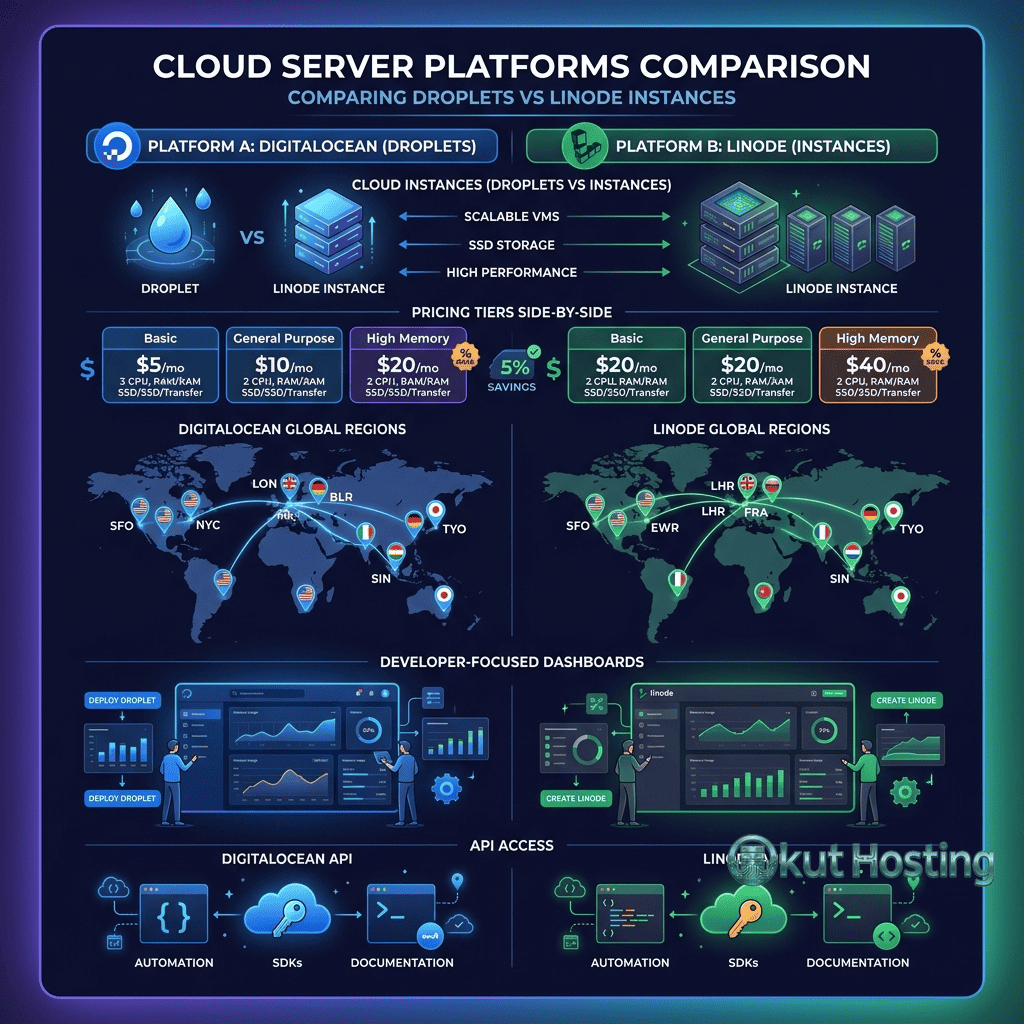
DigitalOcean and Linode represent two of the most prominent independent cloud hosting platforms, both positioned as developer-friendly alternatives to the hyperscale cloud providers (AWS, Google Cloud, Microsoft Azure). These platforms have built loyal communities by providing straightforward cloud infrastructure with transparent pricing, intuitive interfaces, and comprehensive documentation. For developers, startups, small businesses, and growing organizations evaluating cloud server platforms, the DigitalOcean vs Linode comparison represents a choice between two genuinely excellent options with distinct approaches to cloud infrastructure delivery.
This comparison examines both platforms across the dimensions that matter most for cloud server selection: pricing structure, compute performance, storage options, networking capabilities, managed services, developer tools, support quality, and global infrastructure coverage. The analysis provides factual, neutral information to support informed decision-making rather than declaring a universal “winner” — because the better platform depends on specific use case requirements, technical preferences, and infrastructure priorities.
Company Background and Market Position
DigitalOcean was founded in 2011 and has grown into one of the largest independent cloud infrastructure providers, serving millions of developers and businesses worldwide. The company went public in 2021 (NYSE: DOCN) and has expanded from basic cloud droplets into a comprehensive cloud platform with managed databases, managed Kubernetes, App Platform, Spaces object storage, and an extensive marketplace of pre-configured applications. DigitalOcean’s brand identity centers on simplicity and developer accessibility.
Linode was founded in 2003 — making it one of the earliest cloud computing providers — and was acquired by Akamai Technologies in 2022. The Akamai acquisition brought Linode into one of the world’s largest content delivery and edge computing networks, providing integration opportunities with Akamai’s CDN infrastructure and security services. Linode has since been rebranded as Akamai Connected Cloud while maintaining its existing platform and pricing. Linode’s brand identity centers on performance, reliability, and fair pricing.
Pricing Comparison
Both DigitalOcean and Linode offer transparent, hourly billing with monthly caps — meaning users pay by the hour but never more than the monthly price. This pricing model provides cost predictability while allowing flexibility for short-term workloads. The pricing transparency stands in sharp contrast to the complex pricing calculators required by AWS, Google Cloud, and Azure.
At the entry level, both platforms offer comparable shared CPU instances starting at approximately the same price point. As plans scale up, minor pricing differences appear in specific configurations. DigitalOcean offers “Basic” (shared CPU), “General Purpose” (dedicated CPU), “CPU-Optimized,” “Memory-Optimized,” and “Storage-Optimized” droplets. Linode offers “Shared CPU,” “Dedicated CPU,” “High Memory,” and “GPU” plans. The specialized plan categories differ slightly between platforms, with each platform offering unique optimized configurations for specific workloads.
Transfer allowances (bandwidth) are included with instances on both platforms. Both provide generous monthly transfer allocations that exceed the requirements of most workloads. Overage pricing applies when transfer allowances are exceeded, though most users remain well within their allocations. Transfer pooling — combining unused transfer from multiple instances — is available on both platforms, providing flexibility for environments with uneven bandwidth distribution across servers.
Compute Performance
Both platforms provide compute instances built on modern hardware with SSD or NVMe storage. DigitalOcean Droplets and Linode Compute Instances offer comparable baseline performance for shared CPU plans, with performance variation depending on the specific hardware generation deployed. Dedicated CPU instances on both platforms provide consistent, guaranteed processing performance without resource sharing.
Independent benchmark testing from third-party reviewers generally shows competitive performance between the platforms, with specific test results varying based on the data center, instance type, and test methodology. Neither platform consistently outperforms the other across all benchmark categories — DigitalOcean may lead in some CPU-intensive tests while Linode leads in I/O-intensive tests, or vice versa, depending on the specific testing conditions.
NVMe storage is available on newer instance types on both platforms, providing faster storage I/O than SSD-based instances. NVMe storage performance particularly benefits database workloads, high-traffic websites, and applications that perform frequent disk operations. Both platforms continue investing in hardware refreshes that improve compute performance across their instance portfolios.
Global Infrastructure
DigitalOcean operates data centers in multiple regions across North America, Europe, Asia-Pacific, and India. The data center coverage enables deploying workloads close to target audiences worldwide. Each data center region provides the full range of DigitalOcean services and instance types.
Linode (Akamai Connected Cloud) operates data centers across North America, Europe, and Asia-Pacific, with the Akamai acquisition enabling expansion into additional geographic regions. The Akamai integration provides potential future access to Akamai’s extensive global network of edge locations, which could significantly expand Linode’s geographic reach for content delivery and edge computing workloads.
The geographic coverage differences between platforms are relatively minor for most use cases, as both provide data centers in the major hosting regions. Specific data center location availability may favor one platform for particular geographic requirements — users should verify that their preferred region is available on the selected platform before committing.
Block Storage and Object Storage
Both platforms offer block storage volumes that can be attached to compute instances for additional persistent storage. Block storage is useful for databases, application data, and any workload requiring persistent storage that survives instance lifecycle events. Pricing for block storage is comparable between platforms, with both charging per gigabyte per month.
Object storage — DigitalOcean Spaces and Linode Object Storage — provides S3-compatible storage for unstructured data including media files, backups, static website assets, and application data. Both services implement the S3 API, ensuring compatibility with tools and applications designed for Amazon S3. Pricing structures differ slightly, with each platform including different amounts of storage and transfer in the base price.
Managed Services
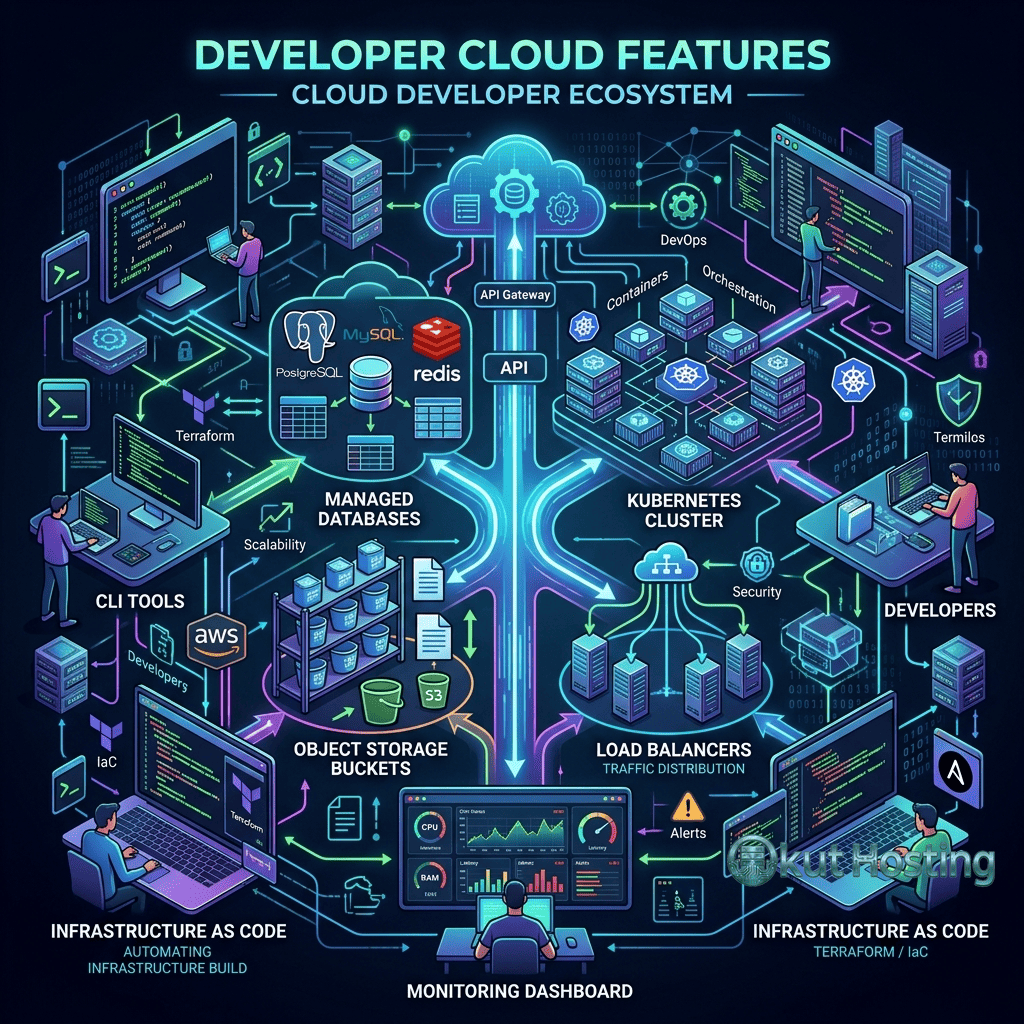
DigitalOcean provides a broader range of managed services: Managed Databases (PostgreSQL, MySQL, Redis, MongoDB, Kafka), Managed Kubernetes (DOKS), App Platform (PaaS for deploying applications), Functions (serverless computing), and Container Registry. These managed services reduce the operational burden of running production infrastructure by handling setup, maintenance, scaling, backups, and security patches.
Linode offers managed services including Managed Database, Linode Kubernetes Engine (LKE), and the Akamai-integrated edge computing and CDN services. Linode’s managed service portfolio is growing through the Akamai integration, with new services and capabilities being added as the platforms integrate. The Akamai relationship provides Linode with enterprise-grade CDN, DDoS protection, and edge computing capabilities that DigitalOcean does not directly match.
For users who need managed Kubernetes, managed databases, or application platform services, DigitalOcean currently offers a more mature managed service ecosystem. For users who need integrated CDN, edge computing, and enterprise security services, Linode’s Akamai integration provides unique advantages.
Networking Features
Both platforms provide VPC (Virtual Private Cloud) networking for isolated private networks between instances, floating IPs for high-availability configurations, load balancers for distributing traffic across multiple instances, and DNS management services. The networking feature sets are functionally comparable for most use cases.
DigitalOcean offers additional networking features including VPC peering and dedicated network bandwidth options on higher-tier instances. Linode provides NodeBalancers (managed load balancers) and VLAN support for network isolation. Both platforms support IPv6 on all instances.
Monitoring and Alerting
DigitalOcean provides built-in monitoring with CPU, memory, disk, and network metrics displayed in the control panel. Alerting policies can trigger notifications based on configurable thresholds. Additional monitoring capabilities are available through the DigitalOcean Metrics Agent and integration with third-party monitoring services like Datadog and New Relic.
Linode provides Longview monitoring with detailed system statistics including CPU, memory, disk, network, and process-level metrics. Longview’s free tier provides basic monitoring for up to 12 hours of historical data, while Longview Pro extends historical data retention and monitoring resolution. Both platforms provide adequate built-in monitoring for basic infrastructure visibility, with third-party monitoring integration available for more comprehensive observability requirements.
Backup and Snapshot Services
Both platforms offer automated backup services and on-demand snapshot capabilities. DigitalOcean Backups provide automated weekly backups with four backup retention slots at a percentage of the droplet’s monthly price. Snapshots provide on-demand point-in-time images with per-gigabyte storage pricing. Linode Backups provide automated daily, weekly, and bi-weekly backups with three backup retention slots plus one snapshot slot, also priced as a percentage of the instance cost.
Linode’s backup service provides more frequent automated backups (daily vs weekly) at similar pricing, giving it a slight advantage for users who want frequent automated recovery points. Both platforms’ snapshot services support creating disk images for migration, scaling, and disaster recovery purposes. For comprehensive backup strategies, both platforms support integration with external backup tools and object storage for off-server backup retention.
Marketplace and One-Click Applications
DigitalOcean Marketplace offers a large selection of pre-configured application images including WordPress, Docker, GitLab, LAMP/LEMP stacks, monitoring tools, and development frameworks. The marketplace enables deploying complex application stacks in minutes without manual configuration. DigitalOcean’s marketplace is notably larger and more curated than most competing platforms.
Linode Marketplace provides similar one-click deployment capabilities with pre-configured applications and development stacks. The Linode marketplace covers the most popular applications and frameworks, though the selection is somewhat smaller than DigitalOcean’s marketplace. Both platforms continue expanding their marketplace offerings with new applications and updated images.
Developer Experience
DigitalOcean has invested heavily in developer experience, providing an intuitive control panel, comprehensive API, CLI tool (doctl), Terraform provider, extensive documentation, and a large community tutorial library. The DigitalOcean community tutorials are one of the most comprehensive free technical documentation resources on the internet, covering topics well beyond DigitalOcean-specific services.
Linode provides a well-designed Cloud Manager interface, comprehensive API, CLI tool (linode-cli), Terraform provider, and documentation library. Linode’s documentation is thorough and technically accurate, covering platform services and general system administration topics. The Linode community is smaller but technically engaged, with active forums and discussion platforms.
Both platforms provide IaC (Infrastructure as Code) integration through Terraform providers, Ansible modules, and Pulumi support. Both offer marketplace images with pre-configured software stacks for common applications. The developer experience on both platforms is significantly more accessible than the hyperscale cloud providers, reflecting their focus on developer simplicity.
Customer Support
DigitalOcean provides support through ticket-based email support on all plans, with premium support plans available for faster response times and dedicated support. The community forums and documentation serve as primary self-service support resources. Business-tier support provides SLA-backed response times and technical account management.
Linode provides 24/7 support via phone, email, and ticket for all customers. The inclusion of phone support on all plans is a significant differentiator — DigitalOcean does not offer phone support on standard plans. Linode’s support team is known for responsive, knowledgeable assistance that extends beyond platform-specific issues to general server administration guidance.
Security Features
Both platforms implement robust infrastructure security including data center physical security, network security, and DDoS mitigation. DigitalOcean provides Cloud Firewalls, monitoring and alerting, and compliance certifications (SOC 2, ISO 27001). Linode provides Cloud Firewalls, Akamai-integrated DDoS protection, and compliance certifications. The Akamai integration provides Linode with enterprise-grade security capabilities including advanced DDoS mitigation and web application firewall services.
Compliance and Enterprise Features
Both platforms maintain SOC 2 Type II compliance certifications that validate their security controls and operational procedures. DigitalOcean has invested in enterprise features including team management, project organization, and role-based access control. Linode provides similar team management capabilities through the Cloud Manager interface. For organizations with compliance requirements, both platforms provide the certifications and security controls needed for regulated workloads, though hyperscale providers offer broader compliance certification portfolios.
WordPress and Web Hosting
Both platforms are popular choices for WordPress hosting through self-managed LEMP/LAMP stack deployments or marketplace one-click installations. DigitalOcean’s marketplace WordPress image includes optimized Nginx configuration, PHP-FPM, and MySQL/MariaDB. Linode’s marketplace WordPress deployment provides similar pre-configured stack optimization. For users migrating from shared hosting to cloud infrastructure for WordPress, both platforms provide the performance upgrade that growing WordPress sites need, with full server control that shared hosting cannot provide.
Migration Between Platforms
Migrating between DigitalOcean and Linode is facilitated by both platforms’ use of standard Linux distributions, open-source software stacks, and S3-compatible object storage APIs. Server configurations can be replicated through Infrastructure as Code tools (Terraform, Ansible), application data can be transferred via standard backup and restore procedures, and object storage data can be synced using S3-compatible tools like rclone. The use of open standards and common technologies ensures that workloads are not locked into either platform.
Cost Optimization Strategies
Both platforms support cost optimization through reserved instances, right-sizing recommendations, and resource monitoring. DigitalOcean provides resource usage insights through the control panel that help identify over-provisioned or underutilized instances. Linode provides similar resource utilization visibility through Longview monitoring. Right-sizing — adjusting instance specifications to match actual resource requirements — is the most effective cost optimization strategy on both platforms and can significantly reduce monthly infrastructure costs without affecting application performance.
For workloads with predictable resource requirements, both platforms provide cost advantages over hyperscale cloud providers. The transparent, flat-rate pricing model eliminates the complex cost calculations and surprise billing that can occur with usage-based pricing on AWS, Google Cloud, and Azure. This pricing predictability is particularly valuable for startups and small businesses with fixed infrastructure budgets that cannot accommodate variable monthly billing.
Community and Ecosystem
DigitalOcean’s community ecosystem is one of the strongest among independent cloud providers, with a comprehensive tutorial library covering thousands of technical topics, active community forums, and developer-focused events. The DigitalOcean community tutorials serve as a de facto reference resource for Linux system administration, web server configuration, and application deployment — used widely by developers regardless of their hosting platform. This community investment creates significant brand value and developer loyalty.
Linode’s community is smaller but technically focused, with quality documentation, forums, and the Linode podcast providing platform updates and technical content. The Akamai acquisition provides Linode with access to Akamai’s enterprise customer base and technical resources, potentially expanding the community and support ecosystem over time. Both communities provide valuable peer support and knowledge sharing that supplement official documentation and support channels.
Use Case Alignment
Choose DigitalOcean if:
- You need managed application deployment (App Platform)
- You need a comprehensive managed service ecosystem
- You want extensive community tutorials and documentation
- You need serverless function support
- You prefer a broader marketplace of pre-built applications
Choose Linode if:
- You value phone support included on all plans
- You need integrated CDN and edge computing through Akamai
- You want enterprise-grade DDoS protection
- You prefer a platform with deep Linux expertise
- You need GPU instances for machine learning workloads
Summary
DigitalOcean and Linode are both excellent independent cloud platforms that provide developer-friendly infrastructure at transparent pricing. DigitalOcean offers a broader managed service ecosystem and stronger developer community resources, while Linode provides inclusive phone support and Akamai-integrated enterprise services. The platforms are more similar than different in core compute, storage, and networking capabilities — the choice between them often comes down to specific managed service requirements, support preferences, and integration needs rather than fundamental infrastructure quality differences.
For developers and businesses evaluating both platforms, the recommendation is to test both using their pay-as-you-go pricing — deploying a representative workload on each platform and comparing performance, management experience, and support quality in the context of specific requirements provides more actionable data than any comparison article can deliver.
Features, pricing, and availability discussed in this comparison reflect information available at the time of writing. Please verify current details on the official DigitalOcean and Linode websites. Okut Hosting is an independent review platform with no affiliate relationships with any hosting company mentioned in this article.
For related reviews, see our Vultr VPS review, our Linode vs Vultr comparison, and our guide to managed vs unmanaged VPS.