UpCloud has built its reputation around a singular focus: delivering the fastest cloud server performance in the industry. Founded in 2011 in Helsinki, Finland, UpCloud differentiates itself through proprietary MaxIOPS storage technology that the company claims delivers the highest I/O performance available in cloud hosting. While many cloud providers compete primarily on pricing, managed services, or data center coverage, UpCloud has chosen to compete on raw performance — a deliberate and focused strategy that has attracted a growing and loyal customer base of performance-conscious developers, agencies, and businesses who prioritize server speed above all other hosting considerations.
This review examines UpCloud’s cloud server platform in detail, covering the MaxIOPS technology, server plans, pricing structure, data center coverage, managed services, and the performance claims that define UpCloud’s market positioning. The analysis provides neutral, factual evaluation to help hosting buyers determine whether UpCloud’s performance-focused approach aligns with their hosting requirements.
MaxIOPS Storage Technology
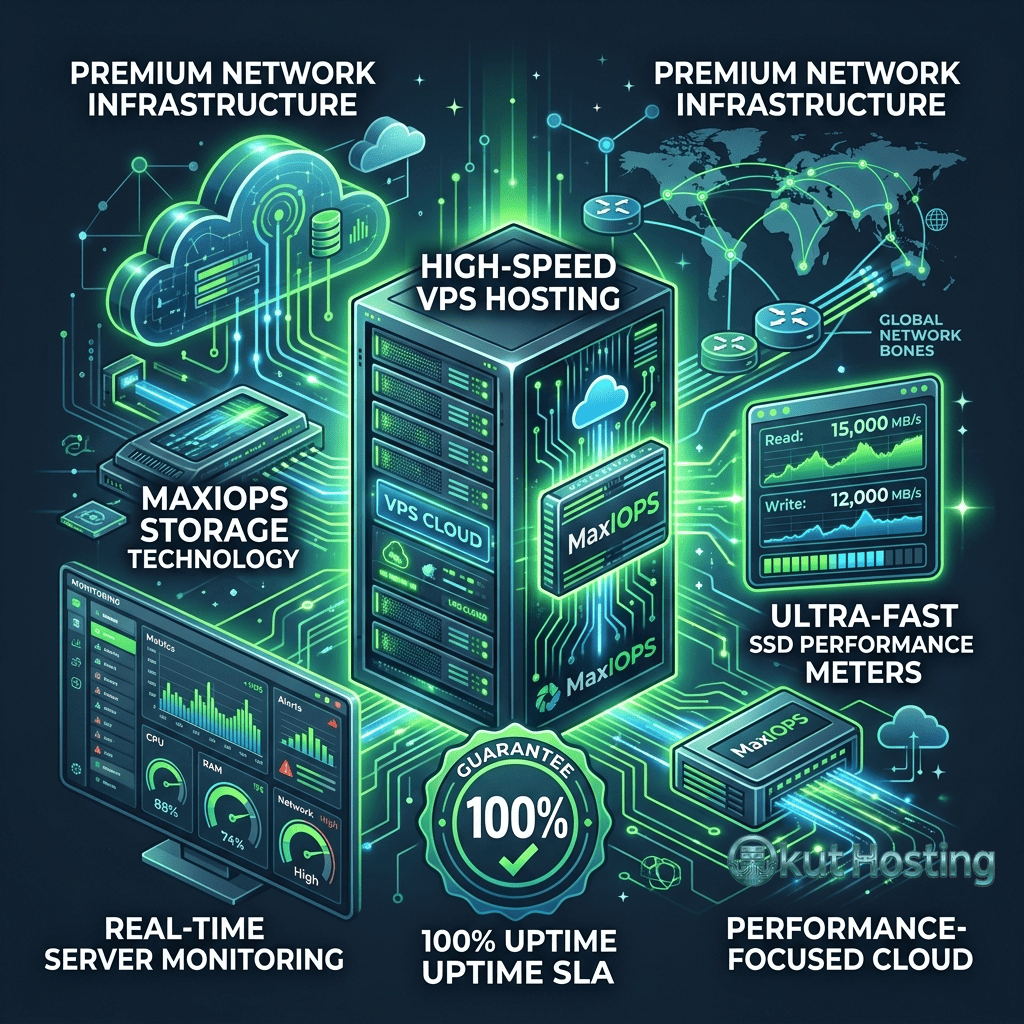
UpCloud’s proprietary MaxIOPS storage technology is the platform’s defining feature. MaxIOPS provides distributed, highly redundant storage architecture that delivers storage I/O performance significantly exceeding standard SSD and NVMe storage configurations used by competing cloud providers. The technology distributes data across multiple storage devices with redundancy, providing both high performance and data protection against individual device failures.
The real-world performance advantage of MaxIOPS technology is most significant and measurable for I/O-intensive workloads including database operations, WordPress with active caching, e-commerce platforms processing frequent database queries, and applications that perform frequent disk reads and writes. For workloads where storage I/O is the performance bottleneck — which includes many common web application workloads — MaxIOPS provides measurable performance improvements compared to standard cloud provider storage.
Independent benchmark testing from third-party reviewers generally validates UpCloud’s performance claims, with MaxIOPS storage consistently ranking among the top performers in cloud storage I/O benchmarks. While the specific performance advantage varies by test methodology and workload characteristics, the consensus among independent reviewers is that UpCloud’s storage performance is genuinely exceptional.
Cloud Server Plans
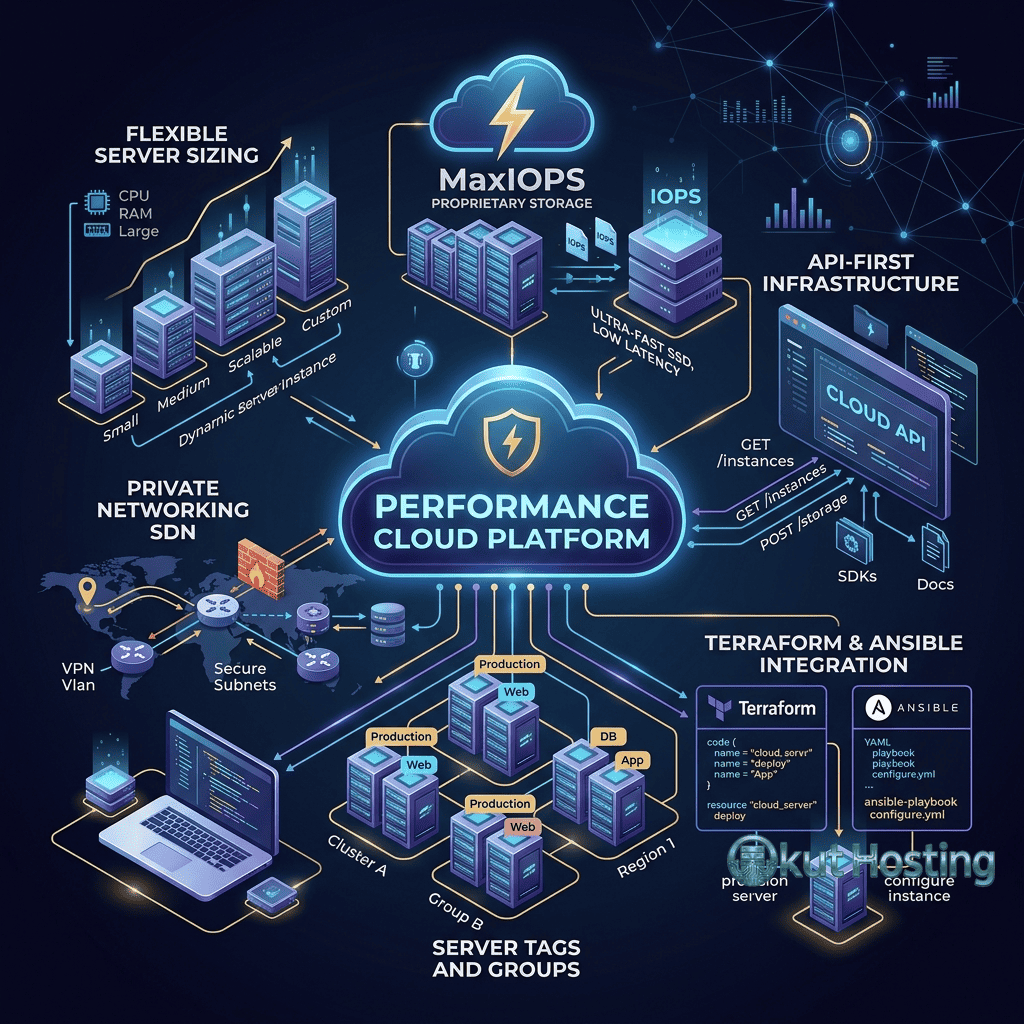
UpCloud Cloud Servers are available in Simple plans (pre-configured resource combinations) and Flexible plans (custom resource specifications). Simple plans provide convenient, pre-configured instances at fixed monthly prices. Flexible plans enable specifying exact CPU, memory, and storage requirements, allowing precise resource allocation that avoids over-provisioning.
The flexible plan pricing model charges separately for CPU cores, memory, and storage, enabling cost optimization by allocating resources to match actual workload requirements. This à la carte pricing model is similar to Google Cloud’s custom machine types and provides more granular cost control than fixed-plan pricing. Users who need high memory but low CPU (or vice versa) can configure instances that exactly match their resource requirements.
Dedicated CPU plans provide guaranteed processing power without resource sharing, suitable for production workloads that require consistent performance. Shared CPU plans provide cost-effective compute for development, testing, and workloads with variable CPU demands.
Private Cloud Networking
UpCloud’s SDN-based private networking enables creating isolated network environments within data center regions. Private networks support VLAN-like segmentation with configurable IP addressing, enabling complex multi-tier application architectures with separate network segments for web servers, application servers, and database servers. The private networking implementation provides network isolation without the performance overhead of VPN-based solutions, maintaining the low-latency communication that performance-critical applications require.
Server Optimization for Web Workloads
UpCloud’s MaxIOPS storage provides the I/O performance foundation, but optimal web server performance requires proper software-level configuration. The platform supports optimized LEMP stack configurations (Linux, Nginx, MySQL/MariaDB, PHP-FPM) that leverage MaxIOPS for database query acceleration and static file serving. Redis and Memcached in-memory caching systems, when combined with MaxIOPS persistent storage, provide a multi-tier caching architecture that maximizes both cache hit performance and cache miss recovery speed.
For PHP-based applications (WordPress, Laravel, Symfony, Drupal), OPcache configuration maximizes PHP bytecode caching performance. MySQL query cache and InnoDB buffer pool tuning optimize database query performance within the available memory allocation. These server-level optimizations compound with MaxIOPS storage performance to deliver web application performance that significantly exceeds typical cloud hosting configurations.
Load Testing and Performance Validation
UpCloud encourages prospective customers to perform load testing and performance benchmarking on its infrastructure, reflecting confidence in the platform’s performance capabilities. The hourly billing model enables deploying test instances, running benchmark suites and load tests, and comparing results against competing platforms without significant financial commitment. This test-before-commit approach is recommended for any organization evaluating UpCloud, as real-world performance testing provides more actionable data than benchmark comparisons published in reviews.
Pricing Structure
UpCloud implements hourly billing with monthly caps, following the standard billing model used by DigitalOcean, Linode, and Vultr. The hourly billing provides flexibility for short-term workloads while the predictable monthly cap ensures accurate cost predictability for long-running production instances. Pricing is transparent and publicly listed, enabling straightforward cost comparison with competing platforms.
UpCloud’s pricing is positioned between budget providers (Contabo, Hetzner) and premium providers, reflecting the performance premium of MaxIOPS storage technology. While not the cheapest option available, UpCloud’s pricing is competitive for the performance level delivered. For workloads where I/O performance directly impacts user experience and business outcomes, the performance-per-dollar ratio may favor UpCloud despite higher nominal pricing.
Data Center Locations
UpCloud operates data centers across Europe (Helsinki, London, Amsterdam, Frankfurt, Madrid, Warsaw), North America (Chicago, New York, San Jose, Seattle), Asia-Pacific (Singapore, Sydney), and South America (São Paulo). The geographic coverage provides data center proximity for major global audiences, with strong European representation reflecting UpCloud’s Finnish heritage.
Each data center provides the full range of UpCloud services and storage technology. The consistent infrastructure across locations ensures that applications perform uniformly regardless of the selected data center region. Data center selection can subsequently be changed by migrating instances between locations, enabling geographic optimization as audience distribution evolves.
Managed Databases
UpCloud Managed Databases provide fully managed database hosting for MySQL, PostgreSQL, Redis, and OpenSearch. The managed database service handles provisioning, configuration, patching, automated backups, monitoring, and scaling. High availability configurations with automatic failover provide database resilience for production workloads. The seamless managed database integration with UpCloud’s high-performance infrastructure delivers database performance that benefits from the same I/O optimization philosophy that drives the compute platform.
Object Storage
UpCloud Object Storage provides S3-compatible storage for unstructured data including media files, backups, and static assets. The object storage service provides highly scalable, fully redundant storage with standard S3 API compatibility, ensuring tools and applications designed for Amazon S3 work with UpCloud Object Storage. Object storage pricing is competitive and includes data transfer allowances.
Networking
UpCloud provides SDN (Software-Defined Networking) with private networking, floating IPs, and load balancer services. Private networks enable isolated communication between cloud servers within the same data center without traffic traversing the public internet. Floating IPs provide static IP address assignment that can be moved between servers for high-availability configurations. Load Balancers distribute traffic across multiple servers with health checking and multiple protocol support.
Cloud server firewalls provide network-level access control configurable through the control panel and API. IPv4 and IPv6 addresses are included with all cloud servers. The networking feature set covers core requirements for most cloud deployments with some advanced features that smaller providers do not offer.
Kubernetes Support
UpCloud Managed Kubernetes provides managed Kubernetes clusters for containerized workload orchestration. The managed Kubernetes service handles control plane management, automatic upgrades, and integration with UpCloud’s storage and networking services. Worker nodes run on UpCloud Cloud Servers with MaxIOPS storage, providing the same performance advantages for containerized workloads that benefit individual server deployments. The Kubernetes service enables deploying production container workloads on UpCloud’s high-performance infrastructure.
Server Tags and Organization
Server tags enable organizing cloud servers into logical groups for management, monitoring, and billing purposes. Tags support custom categorization schemes including environment (production, staging, development), project, team, and cost center labels. The tagging system integrates with the API for automated resource management and reporting, enabling organizations to maintain visibility into resource allocation across complex, multi-server deployments.
Cloud-Init and Automation
UpCloud supports cloud-init for automated server configuration during provisioning. Cloud-init scripts enable installing packages, configuring services, creating users, and deploying applications automatically when servers are created. Combined with the API and Terraform provider, cloud-init enables fully automated infrastructure provisioning that requires zero manual intervention after deployment, supporting Infrastructure as Code workflows and auto-scaling architectures.
User data scripts extend cloud-init functionality for custom provisioning workflows. The powerful combination of reusable server templates, cloud-init scripts, and API-driven provisioning enables building fully automated deployment pipelines that create production-ready servers in minutes. For agencies and service providers deploying similar server configurations repeatedly, this automation reduces deployment time and eliminates configuration inconsistencies.
Developer Experience
UpCloud provides a clean, modern control panel for server and resource management. The comprehensive API enables full programmatic control over all UpCloud resources. The CLI tool (upctl) provides command-line management capabilities. Terraform provider support enables Infrastructure as Code management. Ansible integration enables automated configuration management. Packer integration enables automated image creation.
Server templates and application images provide pre-configured deployment options for common software stacks. Custom ISO uploads enable deploying any operating system. Metadata service provides instance information for cloud-init and application configuration. The developer tool ecosystem supports modern Infrastructure as Code and DevOps workflows.
Backups and Snapshots
Automated backups provide scheduled backup snapshots with configurable retention. On-demand backups provide point-in-time server images for migration, scaling, and disaster recovery. Backup storage is replicated across multiple physical devices for redundancy. Server cloning enables creating identical copies of existing servers for scaling and environment replication.
WordPress Hosting on UpCloud
WordPress hosting on UpCloud benefits directly from the MaxIOPS storage performance. WordPress’s database-intensive architecture — with frequent MySQL queries for content delivery, user sessions, and plugin operations — benefits from fast storage I/O that reduces database query latency and page generation time. Independent WordPress performance benchmarks consistently rank UpCloud among the fastest platforms for WordPress hosting, with consistently excellent TTFB (Time to First Byte) measurements and server response time benchmarks that demonstrate the real-world impact of MaxIOPS on WordPress performance.
For WordPress agencies managing multiple client sites, UpCloud’s performance advantage translates into better Core Web Vitals scores, improved user experience, and higher search engine rankings for client sites hosted on the platform. The performance differentiation provides agencies with a competitive advantage that justifies the modest price premium compared to budget hosting alternatives.
WooCommerce and E-Commerce Hosting
WooCommerce and other e-commerce platforms benefit particularly from UpCloud’s MaxIOPS storage performance. E-commerce operations generate intensive database activity through product catalog queries, shopping cart operations, order processing, and inventory management. the significantly reduced database query latency provided by MaxIOPS storage technology translates directly into faster page loads for product listings, shopping cart interactions, and checkout processes — directly impacting conversion rates and revenue for e-commerce businesses.
Service Level Agreement
UpCloud provides a 100% SLA (Service Level Agreement) for server uptime — one of the most aggressive uptime guarantees in the cloud hosting industry. The SLA includes service credits for any downtime that falls below the guaranteed level. This commitment to uptime reliability demonstrates UpCloud’s confidence in its infrastructure quality and provides customers with financial protection against service disruptions.
Compliance and Data Protection
UpCloud’s Finnish operations provide strong data protection foundations under European law and GDPR. The company maintains ISO 27001 certification for information security management. European data center locations provide data residency options for organizations subject to EU data protection requirements. For organizations that need cloud hosting with European operational sovereignty, UpCloud provides GDPR-compliant infrastructure operated by a European company under European jurisdiction.
Migration to UpCloud
Migrating workloads to UpCloud follows standard cloud migration procedures. Server configurations can be replicated through Terraform and cloud-init automation. Data migration uses standard procedures including file transfer (SCP/SFTP), database export and import, and DNS reconfiguration. The hourly billing model enables testing workloads on UpCloud before committing to full migration, reducing migration risk. The performance improvement from MaxIOPS storage is often immediately noticeable after migrating database-intensive workloads from standard storage platforms.
Competitive Comparison
UpCloud competes with DigitalOcean, Linode, and Vultr as an independent cloud hosting platform with a distinct and specific performance differentiator. While these competitors offer broader managed service portfolios and larger developer communities, UpCloud’s MaxIOPS storage provides a genuine technical advantage that is difficult to replicate through software optimization alone. For users who test workload performance across multiple platforms, UpCloud’s storage I/O advantage is measurable and consistent — providing a factual, independently verifiable basis for the performance claims rather than relying solely on marketing assertions and provider-generated benchmarks alone.
Compared to hyperscale providers (AWS, Google Cloud, Azure), UpCloud provides simpler pricing, more accessible management, and storage performance that competes with premium storage tiers at standard pricing. The trade-off is a smaller managed service portfolio and less extensive compliance certifications compared to enterprise-focused hyperscale platforms.
Security
UpCloud implements infrastructure security through DDoS mitigation, cloud firewalls, and data center physical security. Two-factor authentication secures account access. SSH key management enables secure server authentication. Data center facilities maintain relevant security certifications and comply with European data protection regulations. The comprehensive security implementation covers essential requirements for cloud server deployments in production environments.
Customer Support
UpCloud provides 24/7 customer support through a responsive ticket system and live chat interface. The support team is widely known for responsive, technically knowledgeable assistance that covers both platform-specific issues and general server administration guidance. Support response times are competitive, and the technical depth of support interactions exceeds what many cloud providers offer on standard support plans. Documentation provides comprehensive guides covering UpCloud services, API usage, and deployment scenarios.
Limitations
- Managed service breadth: No PaaS application platform, no serverless functions or event-driven computing — the managed service portfolio is focused on core infrastructure and databases.
- Data center coverage: While growing, the data center network is less extensive than Vultr’s 30+ locations.
- Market presence: UpCloud is less well-known than DigitalOcean, Linode, and Vultr, which may affect community resources and third-party integrations.
- Pricing: Not the cheapest option — performance premium is reflected in pricing that exceeds budget providers.
Summary
UpCloud provides high-performance cloud hosting built on proprietary MaxIOPS storage technology that delivers genuinely exceptional I/O performance. The platform’s performance-focused positioning is consistently validated by independent benchmarks and real-world WordPress performance testing. For workloads where storage I/O performance directly impacts application speed and user experience — including WordPress, database-intensive applications, and e-commerce platforms — UpCloud provides measurable performance advantages that justify its positioning as a premium performance platform.
For hosting buyers who prioritize raw server performance and storage I/O speed above all other considerations, UpCloud deserves serious evaluation alongside DigitalOcean, Linode, and Vultr. The MaxIOPS storage technology provides a genuine technical differentiator that sets UpCloud apart in a market where many cloud providers offer functionally similar infrastructure at similar prices.
Features, pricing, and availability discussed in this review reflect information available at the time of writing. Please verify current details on the official UpCloud website. Okut Hosting is an independent review platform with no affiliate relationships with any hosting company mentioned in this article.
For related reviews, see our Vultr VPS review, our DigitalOcean vs Linode comparison, and our guide to VPS management tools.